




BPC-157: The Biohacker’s Secret Weapon for Back Pain, Sciatica, and Persistent Tendonitis
What We Will Explore:
BPC-157 for Back Pain, Disc Issues, and Sciatica
1. Intervertebral Disc & Ligament Regeneration
2. Sciatica & Neuropathic Comfort
Crushing Tennis & Golfer's Elbow: Tendon Remodeling
Biohacking Stacks: Synergizing BPC-157 for Maximum Impact
1. The Soft Tissue Stack: BPC-157 + TB-500
2. The Nerve & Pain Signaling Stack: BPC-157 + PEA + KPV
3. The Structural Foundation: Collagen Peptides + Vitamin C
Mechanical Loading: The Missing Half of the Equation
1. For Soft Tissue & Joint Repair
If you’ve spent any time in the biohacking or functional longevity space, you know that chronic injury and persistent joint pain are the ultimate bottlenecks to performance.
Whether it's a bulging lumbar disc slowing down your heavy deadlifts, sciatic nerve pain throwing off your sleep architecture, or stubborn Tennis Elbow making pull-ups a nightmare, micro-trauma in low-vascular tissues can linger for months—or even years.
Enter BPC-157 (Body Protection Compound-157).
Often dubbed the "Wolverine peptide," BPC-157 has gained legendary status in recovery and longevity circles for its ability to accelerate soft tissue repair, upregulate growth factor receptors, and orchestrate tissue remodeling where normal blood flow fails to reach.
Here is how BPC-157 works, how it targets back pain and tendonitis, and how to optimize it within a broader recovery stack.
What Is BPC-157?
BPC-157 is a synthetic pentadecapeptide composed of 15 amino acids derived from a protective protein sequence naturally found in human gastric juice.
In nature, gastric lining cells use this sequence to defend against acid erosion and facilitate rapid repair. In a synthetic biohacking context, BPC-157 acts as a powerful biological signaling molecule that triggers localized healing cascades throughout the body—particularly in dense, hypovascular connective tissues (like tendons, ligaments, and intervertebral discs) that normally receive very little blood flow.
Key Biological Mechanisms
Angiogenesis Upregulation: BPC-157 promotes VEGFR2 (Vascular Endothelial Growth Factor Receptor 2) activation, stimulating the growth of fresh micro-blood vessels directly into damaged tissues.
Fibroblast Activation: It speeds up the migration and proliferation of fibroblasts, the primary cells responsible for laying down fresh collagen matrices.
Nitric Oxide (NO) Modulation: BPC-157 balances NO production, helping to modulate localized inflammation while improving tissue perfusion.
Growth Factor Sensitization: Research suggests it increases the expression of growth factor receptors (such as GH receptors in tendon fibroblasts), making your body’s endogenous repair signals significantly more potent.
BPC-157 for Back Pain, Disc Issues, and Sciatica
Spinal tissues are notoriously difficult to heal. Intervertebral discs and spinal ligaments rely on passive diffusion for nutrients, which means once they are damaged or inflamed, recovery is painfully slow.
1. Intervertebral Disc & Ligament Regeneration
A bulging or degenerative disc involves tears in the outer fibrous ring (annulus fibrosus). BPC-157 aids in soft tissue remodeling by encouraging collagen production at the site of the tear. While it won't magically pop a severely herniated disc back into place on its own, it drastically improves the cellular repair environment required for the disc matrix to stabilize.
2. Sciatica & Neuropathic Comfort
Sciatica happens when the sciatic nerve gets compressed or irritated by surrounding tissue, triggering intense neuro-inflammation. BPC-157 exhibits neuroprotective properties and supports nerve sheath repair. When combined with anti-inflammatory signaling molecules, it helps damp down the hyperexcitable nerve signals that keep your nervous system stuck in a high-pain state.
Crushing Tennis & Golfer's Elbow: Tendon Remodeling
If you deal with Tennis Elbow (lateral epicondylitis) or Golfer’s Elbow (medial epicondylitis), you aren't dealing with simple inflammation—you are dealing with tendinosis, a state of chronic micro-tearing and failed collagen repair.
Tendons have poor intrinsic blood supply, which is why ice, rest, and NSAIDs rarely fix chronic elbow issues. BPC-157 alters this dynamic by accelerating tendon-to-bone healing and stimulating localized vascularity.
Tennis elbow: Accelerates tendon-to-bone reattachment; upregulates collagen synthesis
Golfers Elbow: Increases localized micro-circulation to flush metabolic waste & drive remodeling
Biohacking Stacks: Synergizing BPC-157 for Maximum Impact
Biohackers rarely rely on single monotherapies. To maximize connective tissue and nerve repair, BPC-157 is frequently stacked with complementary compounds:
1. The Soft Tissue Stack: BPC-157 + TB-500
TB-500 (Thymosin Beta-4 Fragment): While BPC-157 focuses on localized angiogenesis and fibroblast recruitment, TB-500 operates systemically, regulating actin cell motility and tissue migration. Together, they form the gold-standard peptide pair for soft tissue rehabilitation.
2. The Nerve & Pain Signaling Stack: BPC-157 + PEA + KPV
PEA (Palmitoylethanolamide): A fatty acid amide that acts on endocannabinoid-like pathways to soothe glial cell neuro-inflammation in sciatica.
KPV (Alpha-MSH Tripeptide): A potent anti-inflammatory signaling peptide that helps reduce systemic and localized cytokine activity.
3. The Structural Foundation: Collagen Peptides + Vitamin C
Hydrolyzed Collagen: Peptides signal the body to build collagen, but you still need the physical building blocks (proline, glycine, hydroxyproline) and Vitamin C as a necessary cofactor to synthesize strong collagen cross-links.
Mechanical Loading: The Missing Half of the Equation
In the biohacking space, it is easy to over-index on biochemistry and ignore biomechanics.
Peptides provide the chemical signaling for tissue repair, but mechanical tension tells your body how to align those new collagen fibers.
For Back Pain & Sciatica: You must incorporate core stiffness, pelvic alignment strategies, and spinal decompression (e.g., hanging, reverse hypers).
For Elbow Tendonitis: Combine BPC-157 with eccentric loading protocols (e.g., Tyler Twists with a FlexBar or slow tempo eccentric wrist curls) to force new collagen fibers to lay down parallel along lines of stress.
The Veloura Dosage Protocol
Precision is the hallmark of the Veloura lifestyle. While BPC-157 is highly effective, your dosage should reflect your specific wellness goals.
1. For Soft Tissue & Joint Repair
If you are managing a nagging injury, tendonitis, or recovering from a strenuous training cycle, a localized approach is often best.
Recommended Dose:250mcg – 500mcg daily.
Method:Subcutaneous (SubQ) injection near the area of concern.
Duration:A 4 to 6-week cycle is standard for meaningful tissue regeneration.
2. For Gut Health & Systemic Vitality
To address digestive inflammation, bloating, or systemic "wear and tear," BPC-157 works beautifully as a systemic regulator.
Recommended Dose:250mcg once or twice daily.
Method:Oral capsules or SubQ injection (abdominal area).
Duration:4 weeks for a "reset," up to 8 weeks for chronic gut issues.
3. Post-Procedure Recovery
Many Veloura clients utilize BPC-157 to support the body’s natural healing after cosmetic or orthopedic procedures.
Recommended Dose:500mcg daily.
Duration:Start 48 hours post-procedure and continue for 30 days to minimize downtime and scarring.
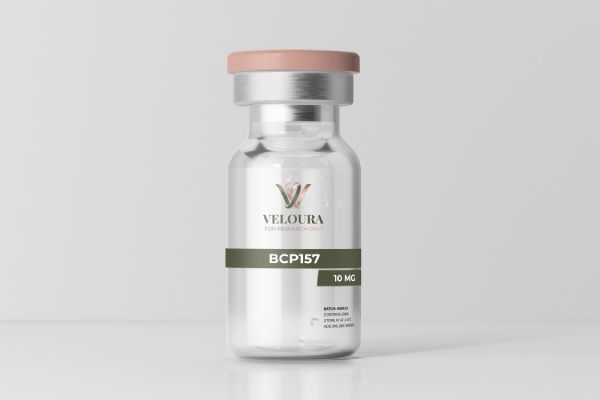
BCP157 | CLICK IMAGE TO BUY NOW
Summary Checklist for Biohackers
Source Responsibly: Purity is everything. Ensure any peptide source provides third-party HPLC and Mass Spectrometry testing.
Choose Your Administration: Oral stable-formulation BPC-157 (like BPC-157 arginate) is excellent for gut health and systemic inflammation, while injectable/subcutaneous forms are often preferred by biohackers for direct soft tissue administration near injury sites.
Load the Tissue: Use eccentric rehab movements to signal structural alignment to new tissue.
Optimize the Foundation: Stack with collagen, Vitamin C, and proper sleep to supply the raw materials for cellular repair.
Research Notice: For research purposes only. Not for human consumption. Please ensure all sterile techniques are practiced throughout the reconstitution and administration phase.